
Prologue: A rose between my teeth
I carefully chose a rose from the garden bed at Jandakot Airport.
At some point I'd put my helmet and jacket aside. So it was just me, the bike, and a rose. I placed it between my teeth and headed down the freeway at full throttle, weaving in and out of traffic.
I was on my way to an auditorium where my wife and I were going to be praised.
The only problem was, there was no auditorium. And my wife had left me.
This is the story of God's faithfulness in my insanity.
Before you start
My name is Dave Bolt. I'm 44. I'm a dad of three and a stepdad of four, and I've lived with bipolar type 1 for more than twenty years.
I'm also a Christian. My faith was formed in me so young that I don't know how to live in a way where God isn't part of my thinking.
This little book is about both of those things. It's about what bipolar type 1 actually feels like from the inside, what it has cost me and the people I love, and how God has been faithful to me in the middle of my insanity. I mean that word literally. A court once found me not guilty by reason of unsoundness of mind.
Every story in here is true. I've changed the names of people outside my family, and I've left out parts of other people's stories that are theirs to tell. Some of it I'm proud of and some of it makes me cringe. But this illness is not respectful of my pride, so here it is.
Chapter 1
The verdict
When I was a boy, my Nana once said to me, "You'll make a great pastor one day."
When she said that, I pictured the pastor we had at the time, and everything in me cringed.
Then, when I was nine, I remember putting my seatbelt on in the car and hearing a voice, or having a strong thought: Dave, you're going to be a pastor one day.
I don't know if that was just me remembering Nana's words and trying to work out who the heck I was. But something in me latched onto it.
All I wanted to do as a kid was draw cartoons and be a pastor. My compass was set early to serving God.
In my early twenties, seven months into my first marriage, I had my first psychotic episode. I'll tell you what that was like later. What matters here is that I got unwell and some stuff happened, and I was charged with threats to kill and assault causing bodily harm.
They encouraged me to plead guilty. I'd get community service, a slap on the wrist, and it would all be done and dusted.
We said no. There was no way I was pleading guilty to getting sick. I hadn't done anything criminal. I got unwell, and some stuff happened. My dad was so aware that a criminal record would be a death sentence to so many of the things I wanted to do. A criminal record doesn't do much for a boy who wants to be a pastor.
About one in a hundred people have this condition. Why should I go to prison, or carry a criminal record, because I'm the one in a hundred?
It took two years to get to court. In those two years I got well. I took my medicine, even though it was giving me boils and skin conditions and lethargy. Half the time I was a zombie. But I did everything I was told. I was the perfect patient.
I worked as a teacher's assistant in a school, with pre-primary kids. I illustrated my first children's book, and I think my second. We were in and out of court the whole time, but life was just starting to settle back down.
And then I was in court for the verdict.
Not guilty by reason of unsoundness of mind. Then the judge said his hands were tied. I was to be detained at the Governor's Pleasure in a maximum security facility.
Two years of working with children, and I was locked up indefinitely. This is what mandatory sentencing laws do. They bind the hands of a judge who knows better.
They took my tie off me. They took me down to the bottom of the court and put me in a holding cell with about ten other guys. A tiny little cell.
And I'm sitting there and I'm thinking to myself, I should be going crazy right now.
But I felt peace. I felt okay. And I think for me, that was God with me.
I'm six foot two and about 120 kilos, so I'm not a small bloke. But then a massive guy walked in, Serbian or something. His presence felt quite safe, though.
The most aggressive guy in there was short and bald. Lots of bark but no body. He was really aggressive to me, but I felt okay.
The guys would call out, "Guard, what's the time?" and the guards would call back random times.
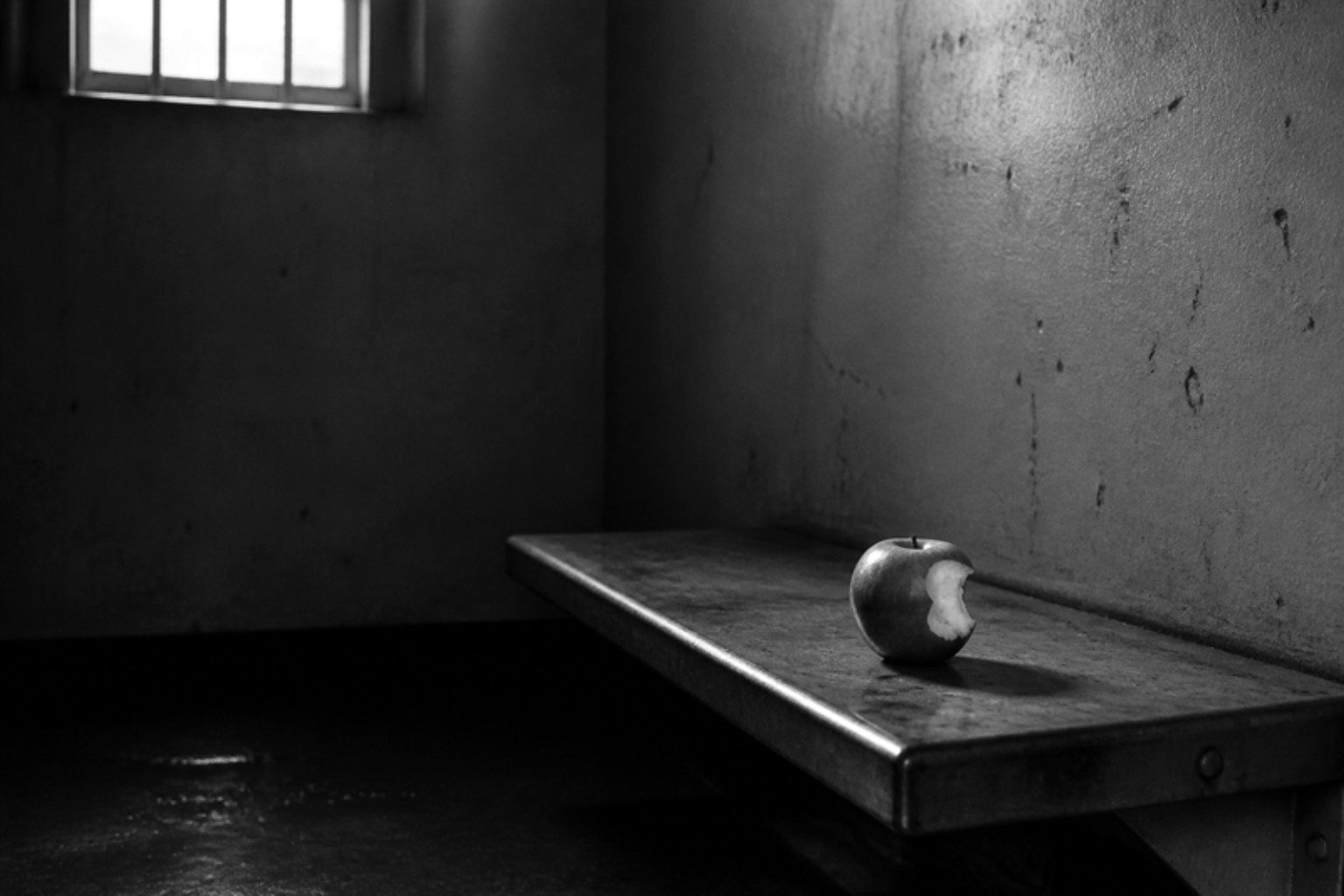
Instead of food for everyone, they brought in one box of quartered sandwiches and one apple. The stuff they do in the court is provocative. The sandwiches went round and everybody had one. Then the big guy passed me the apple. I took a bite and passed it to the next guy. Everybody had a bite of that apple.
In the weirdest way, it was common camaraderie. I wasn't going out of my mind.
Maybe it was adrenaline. I don't know. But there have been times like that, where I've felt peace in a place where I had no right to feel peace.
Chapter 2
Inside
When I finally left the court, they put me in a paddy wagon. As soon as I got in, I asked, "Are you taking me to the Frankland Centre?" I didn't want them to take me to a maximum security prison. I don't know if they answered me.
When we arrived, I got out and asked, "Is this the Frankland Centre?" Then I said, "Where's Dr Harris? I want to speak to Dr Harris." I'd been told he was the one running it and that he knew I was coming.
They walked me in, stripped me naked and put me in the shower. They were looking over my body. There were nurses over in the corner, talking, and somebody in the shower with me making sure I wasn't injured. You're in the system now.
Then they took me to one of the wards. I had a few personal belongings, and one of them was my Bible. They weren't going to let me keep it because it had a string in it, and apparently I might use the string to kill myself. So I tore the string out, gave them the string and kept my Bible.
The first person I met was a big guy with long hair, balding. I don't remember his name. He told me he'd spent the last couple of years in Casuarina. That's how it works. When people become unwell in prison, they get transferred to the Frankland Centre.
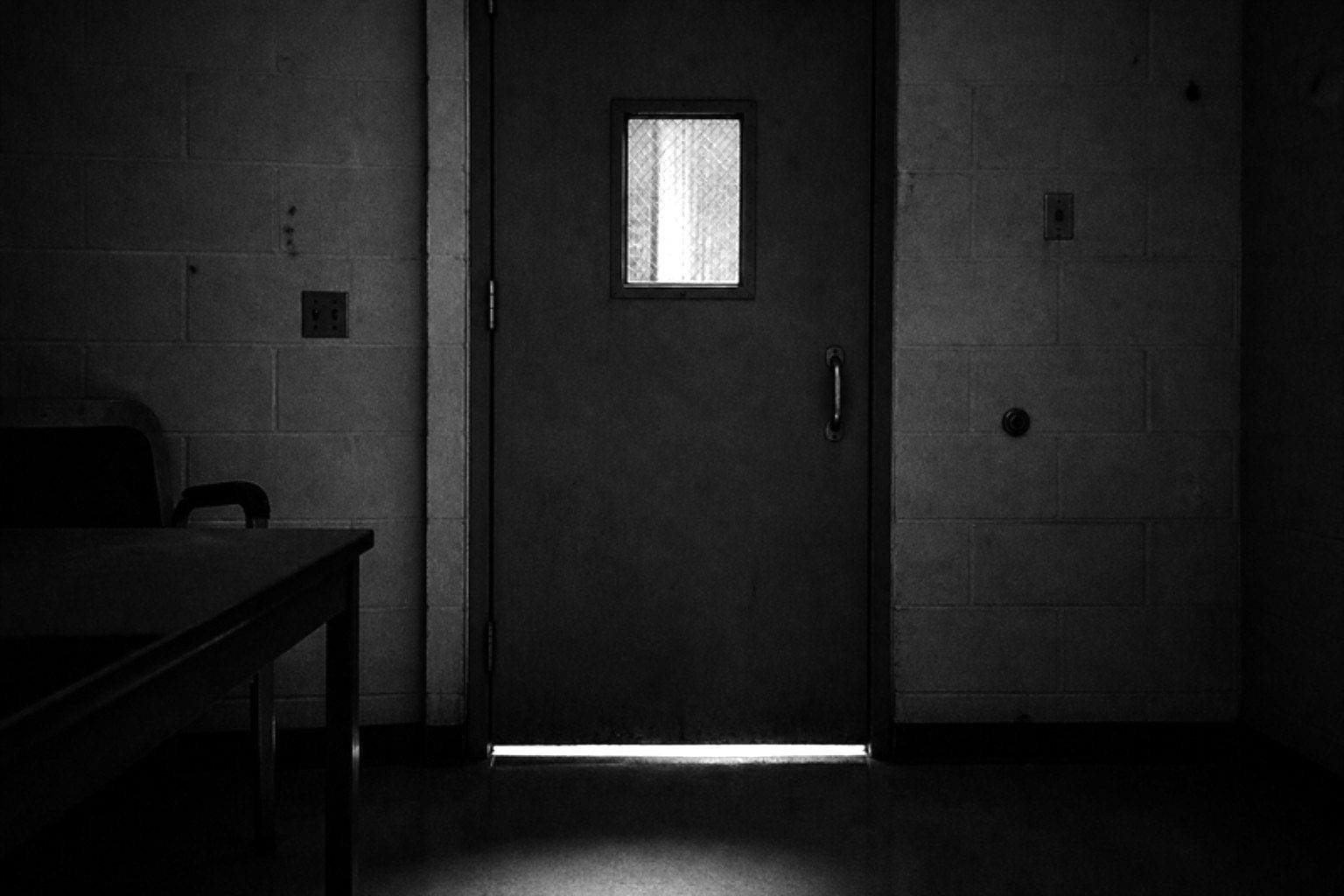
That first night, I didn't know if the door was going to open again and I was going to get raped.
The doors had sensors, so the control room would know if they opened. But after a few weird conversations, knowing that people weren't on the level, it was not great.
Eventually I fell asleep.
On the first morning, people were trading stories about why they were there. Three of the five people at that table had killed somebody. One guy had been in a drug-induced psychosis and rolled over and suffocated his partner. Another guy had been there for years. It's like they just get locked up indefinitely and forgotten about, and they've got nobody on the outside advocating for them.
I worked out that one of the scariest guys in there really liked sugar. So I saw sugar as a bit of a currency. Every time I had a meal, I kept my sugar safe. I found out later he was diabetic. But I was doing whatever I had to do to work out what the currency was in there.
I remember walking the hall with one guy and thinking, this guy's pretty much on the level. Then he started talking about being Da Vinci. It was really random. I thought, oh, this guy's not with it.
There was a young female doctor there. She was pretty, I'll say that for a start. Very pretty. And she was kind. She was young and curious, and I think she knew enough of my story to know it was unfair that I was there.
When you're detained at the Governor's Pleasure, it's the Governor's signature you need to get out. So you have to climb all the way up the ladder. My dad went out and collected signatures from politicians, and they were talking to the police minister of the day. Dad can tell that part better than I can. I just knew they were out there fighting for me.
For a long while my family kept being told, he's in here now, he's part of the system. You would have been better off pleading guilty. Terrible times.
My church visited. Everybody came. The youth group and the young adults group really got behind me, and I had as many visitors as you're allowed, and more. I think the staff were overwhelmed. I think they were frustrated that I had so many visitors. It was a funny thing. It was humbling and validating.
I think I was in maximum security for about six weeks, and then I moved to the open ward. Even when I got out, I was on orders. I couldn't leave the state without asking permission. It was pretty rough.
Sarah and I had to get permission to move to Port Lincoln. I got work in a sardine factory.
Looking back, I don't blame her. She'd married one man, and then lived through two years of court cases and illness and a locked ward with another. We'd only been in Port Lincoln a month or so, maybe a few months, when she sat me down and said, "I don't love you anymore."
My dad came over to take me home. Before we left, I was showing him through the sardine factory, and I stepped down off a ledge and broke my knee. My body went one way and my leg went the other.
When I was a kid, a couple of prophets came to town. One of them said to me, "David, I just wish I had good news for you. But I just see you packing your bags."
And sure enough, there we were, sitting in Port Lincoln Airport. Broken knee. My bags lined up next to me. Dad turned to me and said, "Dave, looks like you just packed your bags."
It was just a knowing pain. A pain that we both knew.
Chapter 3
My life had been archived
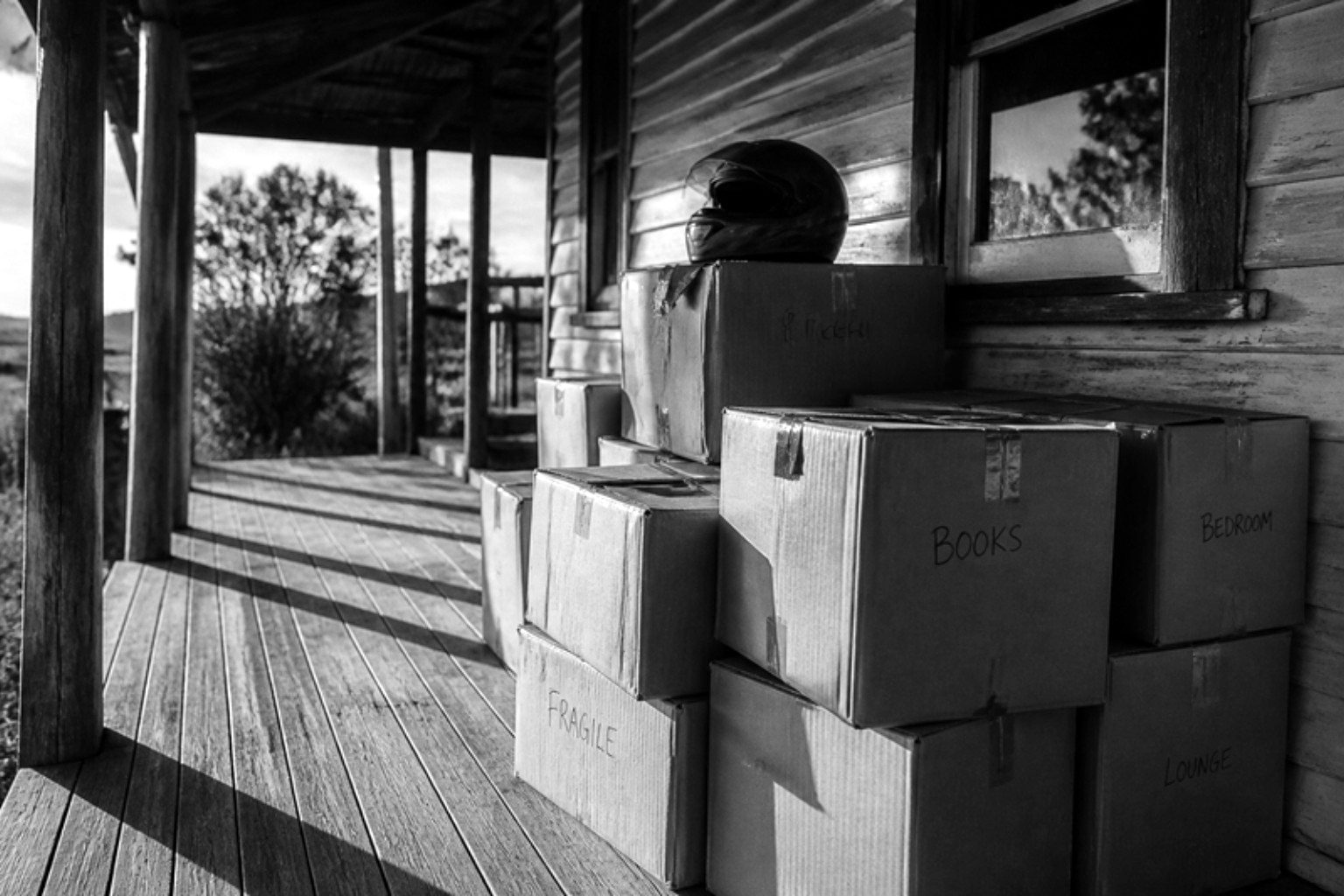
My parents owned a bed and breakfast. One day, twelve boxes of my things arrived on the back veranda. Everything I owned from that life, packed up and sent home.
It's a weird feeling to have your life packed up, and by somebody else as well. Like you're shipped off. It's something I've known more than once now.
My life had been archived.
I was fortunate. My parents had been able to buy the property next to the bed and breakfast, and I lived there with my foster brother, Brian. The boxes got moved over the road and unpacked, and away I went.
We sold the house. With my share of the money I bought a motorbike, a Honda VTR 250, beautiful matte black with gold trim. I learned to ride it.
And I started working as a youth worker at an emergency accommodation facility just up the road. Kids living on the streets, kids with borderline personality disorder, kids self-harming, the whole box and dice. It's interesting that I went straight back into that work. But it's what I had studied. It's what I knew. I loved people, it was just up the road, and it was a good experience.
If I could sit down next to that young bloke with the broken knee and the twelve boxes on the veranda, my first response would be: buddy, brace yourself. It's only going to get worse.
Then I'd tell him he's going to make some choices that will be very expensive. They're going to cost him a lot. It's going to be a very hard fifteen years.
But it will be worth it, because of the relationships he's going to make.
Chapter 4
Am I okay?
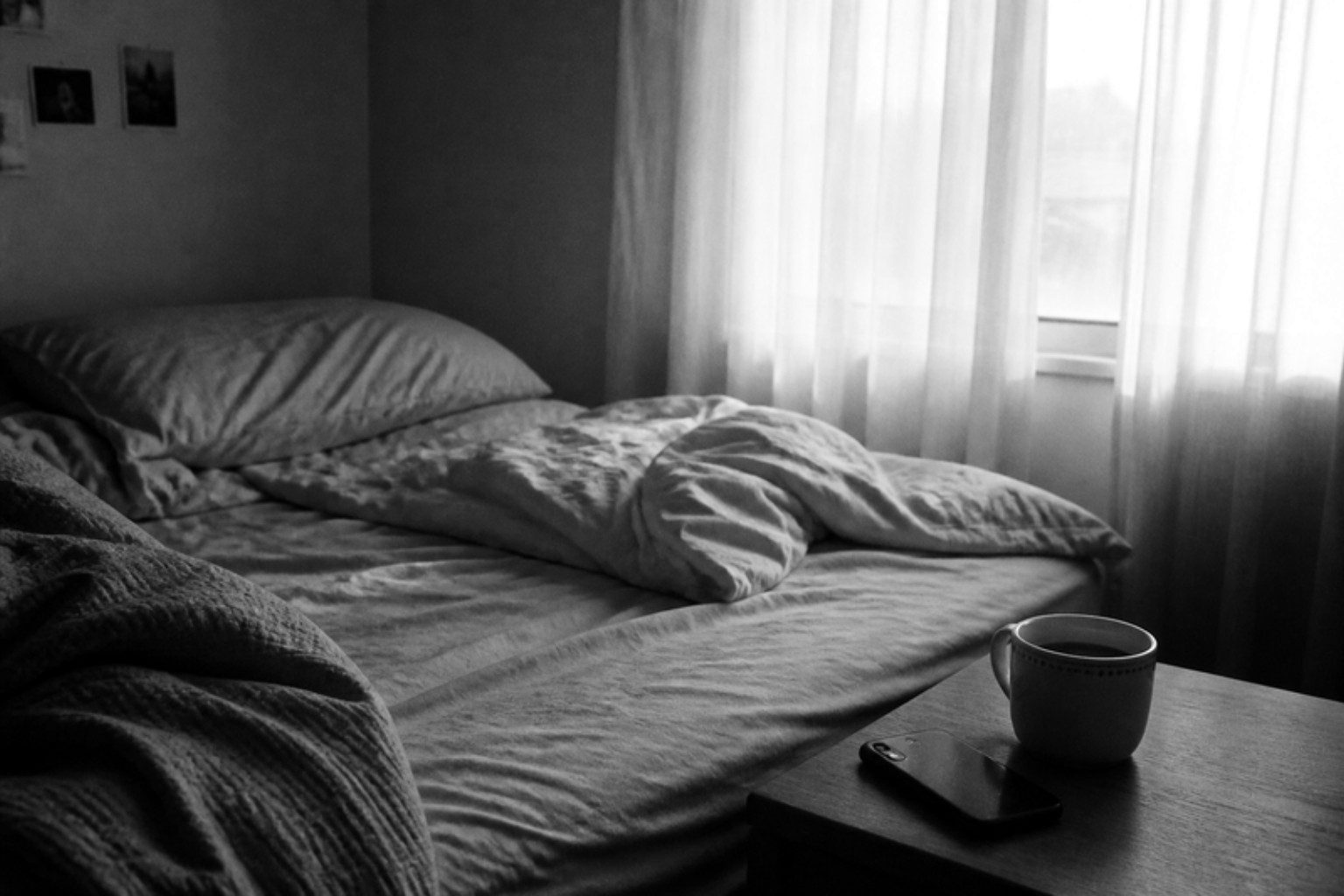
As soon as I'm awake, I'm registering how I feel. Am I low? Am I high? Am I confused? How did I sleep? Were my dreams elevated?
I'm an emotional detective from the moment I wake up.
There's a hypervigilance to it. As soon as I wake there's a sense of, what am I feeling right now? And the question underneath all of it is, am I okay?
Recently I hit a wall. I was very exhausted, and I gave myself permission not to go to church. I had a long sleep, and I woke up still feeling like I had permission. Usually I wake up and play my morning briefings. That day I woke up feeling particularly good. Just knowing I wasn't in the car driving that day was such a comfort.
Not long ago I watched a movie called Companion. It's about an AI robot companion, and it was scarier than what I normally watch. I really related to it. But two or three hours after it finished, my nervous system was still on red alert. I was stressed and agitated. I don't know if elevated is the right word.
I really do feel emotion. If emotion was colours, mine are technicolour. It's hypercolour, man.
Jeff and Julie Crabtree talk about the artist temperament being skinless. I relate to that. I feel everything, and I feel everything intensely.
So I live like a blind person with a cane, constantly tapping, feeling for the edges to make sure.
Am I okay? Am I okay? Am I okay? Am I okay?
I rarely feel nothing. I'm often quite sad or quite upbeat. And I often feel sad for no apparent reason.
I feel like crying. I feel blue, slow and in my head. It can go on for hours in a day, and then, boom, it lifts, for no reason I can see.
When I'm in it, I often want to ask the people close to me, do you sometimes feel quite sad? What I'm really asking is, am I okay?
The mood of the people around me really affects me. Not long ago I was working a shift next to someone who was really flat. Her reactions were slow, like there was a couple of seconds' delay on normal responses. She didn't smile much. There was no spark. And I just felt this sadness come over me. Even anxious energy next to me would have been better than that.
It wasn't until a guy came to the counter and I made a little joke and he had a bit of a laugh that the sadness lifted. Boom, gone. I needed some human interaction. Some connection, and some humour.
When there's an intensity of negative emotion in a room, I'm really susceptible to it.

Chapter 5
These four children need a father
Within about eighteen months of coming home from Port Lincoln, I met Lisa.
I remember standing in a little unit, thinking about this beautiful girl with her four kids. I stood at the end of the couch and talked to God. I said, "These four children need a father at home." And in that moment, I convinced myself it was my job to be that guy.
When I read that now, part of me wants to grab that young bloke by the shoulders and say, who do you think you are, stepping into somebody else's family?
I know their relationship had already ended. But I still feel like I made this amazing superhero gesture to God. I'll be Dad. And it wasn't my place to do that.
I'm not saying I regret it. My choices have led me to some amazing relationships, and I think it's been good for the kids to have had me. But sometimes I wonder if they would have been better off if I'd just minded my own business.
Lisa and I just hit it off. The chemistry was everything. It was an incredibly exciting time and a fulfilling time, and we got married.
Lisa and I were strong together, but those first four years were hard. Blending a family is complicated, and when there are shared children and a difficult situation with an ex, it puts real pressure on everyone. We had to fight hard to protect our home, and we made a go of it.
We started Perth Organics, and it was a raging success. I was working as a school chaplain at the time. I'd do the Perth Organics market pickups in the morning, drive the fruit and veg truck home, drop off the produce and then drive to work in the truck.
It was so exciting working with Lisa. Orders were coming through. The phones were binging. When I went full time and we joined forces, the business tripled. Just the focus we were able to give it. We built up country co-ops. At one point we were selling a thousand litres of raw milk a week.
I was the milkman.
Around the six or seven year mark, one of our boys went through a really dark season, and it put enormous strain on all of us. We sold the business and moved down south, hoping a quieter life would help. The business got sold again and it's still going today.
There was a lot going on at once. I'd moved out of chaplaincy and back into high-pressure sales. The house was full, and often heavy. I soak up the mood of a room, so it was a lot for me to carry. All of it put pressure on our marriage.
We tried everything we knew to protect our boys and help them find their way. Some of that story is still being written, and I still carry it every day. I love them, and I always will.
Looking back, there are things we'd both do differently as parents.
We're talking three divorces now.
I think about what Lisa was living with. The irritability. The always on. The skinlessness. The hypersensitivity to criticism, rejection, invalidation and abandonment. I hadn't done the work then that I've done in the last eighteen months.
People used to say things like, "It's all about Dave." That really used to hurt me, because I really care about people. The big things I've decided to do in my life, like being a stepdad to four kids, loving hard and caring for the community, are all outward things. They're about other people.
But because of this emotional hypervigilance, where I'm always checking am I okay?, I'm communicating that to the people around me. They're getting a weather report. It moves up and down like barometric pressure, and they're getting the readout regularly.
So even though my heart and a lot of my life is focused on others, when I'm around people, they're hearing a lot about how I'm feeling. They're hearing the tapping of the cane.
If I'm honest, I'm still handing out the weather report. Probably less than I used to. But I don't have a partner now, and I've had people leave me.
Chapter 6
What bipolar type 1 actually feels like
Sleep is the edge for me. And it's a very short edge. There's no shallow water.
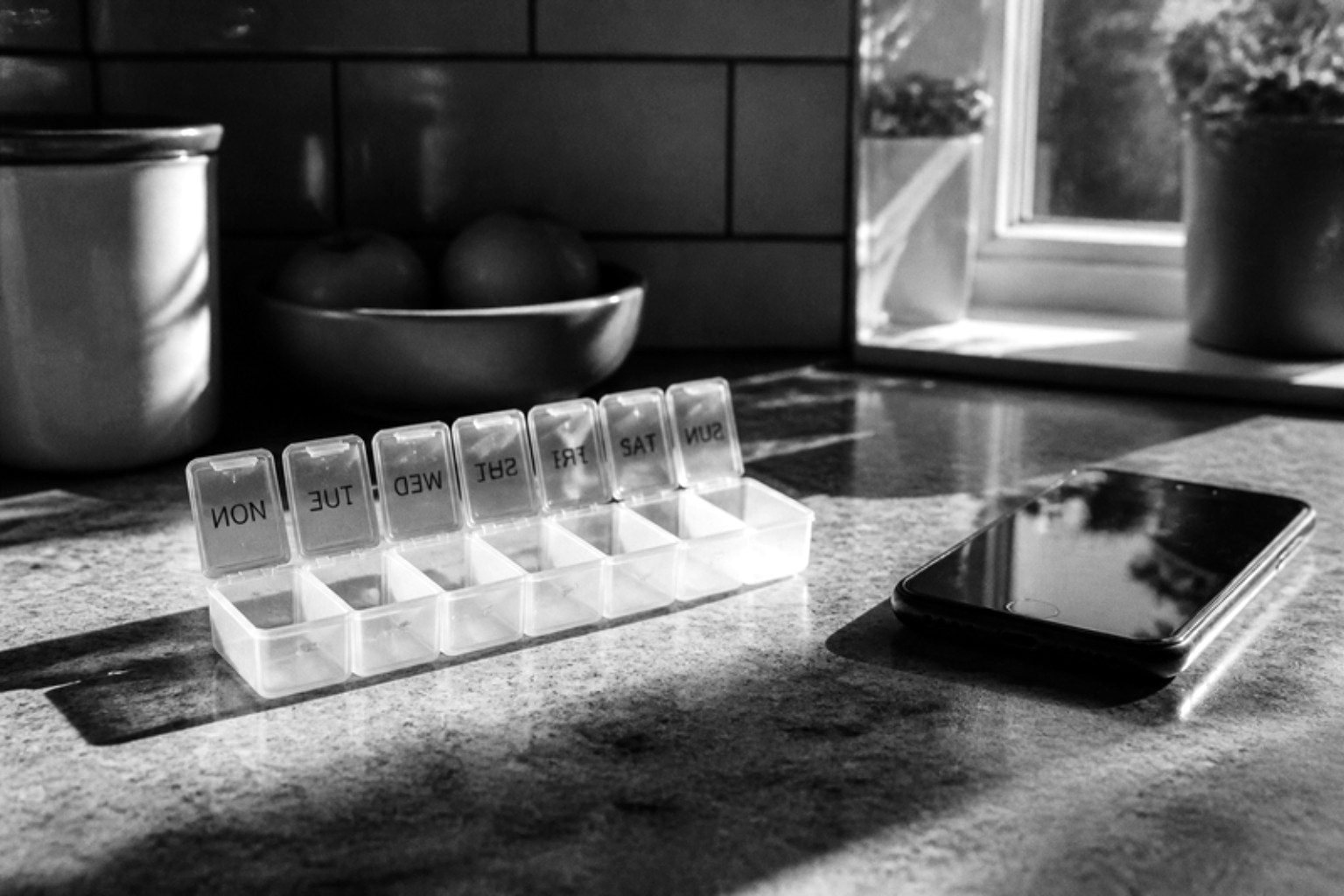
I can go from being well to being in hospital after a few days of not sleeping. Realistically it's more like a few weeks of poor sleep. But I know that when my sleep goes, I become a little more irrational in the way I make decisions, and that's the start of a slippery slope.
Some of my psychotic episodes have been crazy, man. I've walked over the tops of moving cars. I've taken my shirt off. I threw my wedding ring into a moving car. And you already know about the rose.
Some of the stuff has been wild. And at the time, it was making sense to me.
The very first time I got sick, I'd pulled all these threads and followed all these things that I thought were rational, and they weren't. I got to hospital and I had a moment of clarity. I said to my dad, "Dad, I've made a terrible, terrible mistake." I realised the delusions weren't real and I'd made all these errors. It was the most awful feeling.
My son Micah is sixteen now. He's like a 2.0 version of me. I imagine my dad standing in front of a boy he adores, who's been arrested, and that boy saying, "Dad, I've made a terrible, terrible mistake." I can't even imagine what my dad must have been feeling. I know what I was feeling, and it was rotten.
There's another side to bipolar type 1 that people don't talk about much. The high feels good.
In some seasons I tried to rig my medicine, my lifestyle and my coffee so I was living in a hypomanic state. Not manic, definitely not depressed, but in that elevated place. If I felt a bit flat I'd take caffeine tablets to lift myself up. I was doing a lot of manipulation to get into that sweet elevated space and stay there. I felt alive and energised.
I know now how unhealthy that was, and how irritable it made me. I was trying to get the most out of the illness rather than treating it like an illness. I was treating it like a superpower.
Looking back, I wasn't only chasing the high. I'd have weeks or months where my main mood was fine, and then I'd slide back to a baseline of sadness, like it was the default mode. That's when I'd reach for the caffeine tablets, or lots of coffee.
Now I'm in a much healthier, more regulated space. I know I'm going to have moments of brilliance and good amounts of activity without being elevated.
I love to potter. When I'm working at home I pull threads and move really fast, with lots of threads going at once. I used to call it finding the caramel. You're eating ice cream and there's a vein of caramel running through it, and you just dig through the ice cream, following the vein. I think God's presence is like that sometimes too.
I know life can't all be caramel. But being watched over, having my breaks checked, feels like somebody grabbing the spoon out of my hand and saying, only eat vanilla. It undermines my intuition, and I think I've got good intuition about people and about things.
The hard part is that finding the caramel can look a lot like hypomania. Working at pace, leaning into my genius. The difference I've found is this. Hypomania lasts for days. The default is go, go, go, and irritability. When I'm finding the caramel, I can put it down if I want to.
Most of the time. Not long ago a client cancelled a shift, so I had the whole day at the computer. I built two websites and an app, multi-threading across several chats. AI has given me a great ability to create at a level and at a speed that I've never known.
That night I watched that AI robot movie and finished about nine. Then I powered on for two more hours, past my usual ten o'clock bedtime, because I didn't have to be up early. I was anxious and elevated, and I thought, I don't want to try to sleep.
That's the thin edge of the wedge. I could potentially just keep going all night, and then that's the beginning of the end.
So I did some mindfulness, and probably a box in Box of feels, and I got myself to bed.
But the hardest lesson came when I was well.
In the Perth Organics years, my bipolar was managed. My psychiatrist would have said I was in remission. I went from 150 kilos to 95 kilos. I was super fit and riding all the time, and Lisa was doing special things to keep me motivated. We were learning about natural supplements and eating organic meat and veg and drinking raw milk. I guess I was health maxing. We lived like kings. If I could go back and tell myself how incredible those days were, I would.
For my 30th birthday everybody came to celebrate. I'd lost all the weight. I had all my chaplain friends, and Perth Organics was flying.
Then we got confident. We got confident that I had the bipolar nailed. I told my doctor I wanted to come off my medicine, and we very carefully titrated down.
Six or eight weeks in, my psychiatrist rang to check in on me. I told him how amazing I was doing. He said, "Well, you're an outlier." I'd beaten the odds.
I went really well for about twelve weeks. Then boom. Dave's doing great. Dave's doing amazing. Up, up, up into the stratosphere, and into psychosis.
I went to the Perth Clinic, I think by ambulance, in a manic episode. Only a few weeks after he'd called me an outlier, my psychiatrist told me I had the most severe illness he'd seen in twenty years of practising medicine. He'd never seen anybody elevate as fast or as high. He said they were giving me so much medicine he thought it was going to kill me, but the other doctors kept saying I could have a little bit more.
I was transferred to Bentley. Within a few months I was back on my feet and back working at Perth Organics. Lisa was incredible. We took it on the chin and I went back on the meds. But I put a lot of the weight back on.
I spent my 31st birthday in a mental health ward.
I'm 44 now and I'm still not over how devastating that was. I used to call it a process of humbilation. Humbling and humiliating at once. It felt like God was humbling me to the max.
After that I had about ten years pretty much in remission. Then in 2022 I had another episode. Then, a few years later, another. Both of those ended marriages.
This illness is merciless. It takes no prisoners. It doesn't matter how much you love God. It doesn't matter how much you serve the community, how good your intentions are, how intelligent you are, or how much insight you have. It just takes everything.

Chapter 7
Faith in the fog
There have been times I've been frustrated by my faith. It was formed in me so young that I don't know how to live in a way where God isn't part of my thinking. I'm sure that's a gift. But as somebody who might have wanted to rebel or do the wrong thing, I've always had this anchor. It's like I was brainwashed as a kid, in the best way possible. God is in my thoughts constantly, and that's been good and bad.
And sometimes, if I'm honest, faith was the fog.
In a lot of Pentecostal circles it's blab it and grab it. If you've got a mental health condition, it's the devil. I had one man say to me, "Bipolar's a funny name for the devil." What he meant was, you've got a demon, and you're calling it bipolar.
That was pretty deflating, for a guy who was trying so hard to manage it.
About one in a hundred people have bipolar. I think the church would be better off if more of them were pastors. Maybe then we'd actually have some empathy and some understanding around mental health.
What I've been after is a more accurate picture of God, one that comes through scripture and isn't filtered through trauma, so that my view of God is who he actually is.
I remember being in a church service where Graham Cooke was preaching, and he said, "Jesus is the kindest person you've ever met."
It rocked my world. My whole body said, that's not the Jesus I know. The Jesus I knew was angry. He called the Pharisees and Sadducees names. He made a whip and drove people out of the temple. He rebuked people for their little faith. He said, "Get thee behind me, Satan."
What I realised is that the little boy in me needed the nurture of God to come through my mum. Mum was great in so many ways. But to a little boy, she could seem volatile, even scary, and that was the picture I carried. Without knowing it, I laid that picture over Jesus. So I believed in an angry Jesus.
Now, when I think of God's kindness, I think of my children. A lot of people with my story don't get to have three beautiful children and four beautiful stepchildren. When I think about the relationship I have with my children, that's the kindness of God. When I think about my dad and my brother and how wonderful they are, that's the kindness of God. And when I think about my friends. So much of God's kindness has come to me through the wonderful Christian people in my life. Genuine Christian people.
During my first separation from Lisa, a pastor I didn't know well took me under his wing. Years earlier, my dad had been generous and kind to him in his ministry. I had a mentor walking with me as well.
I had an overwhelming sense of the body of Christ ministering to me. I was overwhelmed at the kindness of the friendships I had built in the previous decade.
What landed was time, and presence.
That's community chaplaincy. That's what people desperately need. Empathy, journey and support, and all of those things require time and presence. It's a ministry of presence.
I won't pretend I've got it all worked out. When I look at what this illness has taken, I'm not sure what to think. It's brutal. But I felt peace in that holding cell under the court, and I've got seven kids in my life who call me Dad or something close to it.
Chapter 8
What helps: Box of feels
For ten years, Lisa and I had a name for it. We called it the bad feeling.
It came in the witching hour. A terrible bad feeling, anxiety, shaking. My psychiatrist often asked me why we weren't just calling it anxiety. But it didn't feel cognitive, so I never identified it that way. It was just the bad feeling.
These days I get really granular about what I'm feeling, instead of the vagueness of "I don't feel good." I open the feelings wheel and zero in on what's happening. I trace it back, work out where it's coming from, and do the work. I work through it and get it out of my nervous system.
I built Box of feels out of outrage, if I'm honest. In a past marriage I was told my emotions were too demanding for the relationship, that she couldn't be my emotional support person. That's outrageous to me.
I had a year of time to myself and a lot of soul searching. My psychiatrist encouraged me to get granular, and I found an article on the granularity of emotion. His way of doing it wouldn't suit me. I had a better way.
I'd been writing articles about boxing it up, shipping it off, and how hope deferred makes the heart sick. And I realised, this is my life's work. So I asked the AI, what would it look like to turn my articles into a tool or an app that people can use?
And I've built an app to help me do it. It's called Box of feels. I can put a feeling on the dock, put it on the conveyor, move it to the bookshelf, take things in and out of the basement, or put it on the writing desk. I've got a whole machine now for dealing with the tapping of the cane and the readings on the barometer.
Here's a real example. My dad is the most supportive guy in the world. He's been right there with me all the way along. But not long ago I was feeling anger and resentment towards him, and the volume of it was way out of proportion to who he really is, what he's doing for me and the relationship we have.
So I asked myself, what's that about? I pulled out the feelings wheel and started working through it.
Things were really hard at the time. I didn't have enough money. I don't have a partner. And I realised I was feeling like a little boy wanting to be rescued, and Daddy's not coming to save me.
The 44-year-old Dave doesn't actually need that. But at some point in my history, some bad stuff happened to a little boy who needed his dad to come and rescue him, and Dad wasn't there. Mum and Dad had opened our home to foster children, which was a beautiful thing to do, and they were working a lot.
It was a five-year-old's need showing up in a 44-year-old's life.
I put that box in the basement. I could have put it on the bookshelf, but it doesn't feel completed and processed yet. I could have put it in the archive shed, but the emotion hasn't gone from it. The basement is for unfinished things from the past that still have strong emotion attached to them. So it lives there for now. I'll keep picking at it, adding photos and thoughts and recordings to it, until it's ready to be processed and put on the bookshelf.
Chapter 9
For families: alert, not alarmed
I haven't had a choice about talking to my kids about bipolar. They've watched me. I've always been open and honest about it.
In 2022 I had a psychotic episode at home. I broke some things, and my kids were scared.
As a newly single dad, I had to sit my kids down and say, "Hey guys, if you see this type of behaviour from me, it means I'm not doing okay, and you may need to call an ambulance or the police." When it was just me and my kids, they had to be on the same page as me.
It was very humbling. I cringe to think about it now. But this illness is not respectful of my pride.
If you're a mum or dad with bipolar and you're scared about what your kids are seeing, I'd say the same thing I'd say about raising kids in the faith. The best thing your children can see is you wrestling it out. With faith, that's working out your salvation with fear and trembling, having a real conversation and a real relationship with Jesus, and letting it be on display.
It's the same with the illness. Let them see you taking your meds and protecting your sleep. Have the conversations about emotions. Show them what it's like to be granular about how you feel. Validate their emotions. Take them on the journey. When my kids have been old enough, I've told them some of the stories of my episodes and what happened.
This last year has been hard. I've worried a lot about how vulnerable I am. Single dad. Bipolar. Many times more likely to take my own life. I've had to call Lifeline more than once this year. And I've been shocked at how disconnected guys my age at church have been from how vulnerable I am.
I've worried that this thing's going to win.
I'm in a really good space now. My income has improved. I'm working on good projects. I've got good people around me.
But here's what I live with, even on a good day. If I talk about my emotions, people jump into protection mode. If I'm doing really well, people ask, "Is he doing too well?" My dad lives with that. Dave's doing really well. Probably need to keep an eye on him.
I can't have a good month without red flags going off around the people I love. I can't be too excited or too energetic, or start too many projects, before somebody sends up a flare. It's hard. It's really hard.
And honestly, spotting the real thing isn't easy. We've missed it quite a few times. Looking back, the first sign is always sleep. I need less of it. I start drawing cartoons more. There's more validation seeking, and a franticness to me.
So if you love someone with bipolar, here's what I want you to know. Your fear is contagious.
Remember the blind person with the cane, tapping for the edges. One of those edges is the people in your life letting you know you're okay. When you're worried, we're really worried. When you're fearful, we feel it and sense it, and it can set us off. All of a sudden the firm edges we've been tapping against start moving, and that is terrifying.
John Howard said it years ago: alert, not alarmed. That's what we need from you.
One of my colleagues at work has a pretty good balance. She leans a bit cautious. She doesn't want to see me sick again. But we talk about the illness openly. She's a psychologist and a pastor, so she gets it. She introduced me to DBT, and she taught me that leaders use these skills too, even without a mental health condition.
I think about Formula One. The Ferrari drivers need a pit crew that's the best of the best. The harder you push yourself, the more you want to perform, the more you need the best people, the best tools and the best technology around you.
My dad says that when I become unwell, he never knows if he's getting me back or not. I understand that. I want him to be alert. I just need him not to be alarmed.
Chapter 10
Why I'm still standing
People ask what's kept me going, after everything this illness has taken.
Years ago, I stood at the end of a couch in a little unit and told God, "These four children need a father at home."
Now the answer is simple. My children get to have a father who's at home with them.
I gave myself to being a dad at home for four children who came into my life through Lisa. There's no way my own kids are going to lose me.
Not long ago the kids walked through a house they want me to rent. They all loved it. It's just another small reason to keep pushing. Keep building my retainer clients. Keep doing the hard week over and over again. My kids need me to succeed.
Not just for survival. They need to see that it can be done.
About Dave
Dave Bolt is a community chaplain, NDIS support worker, children's author and illustrator, and the creator of Box of feels. He lives on the Murray River in Western Australia with his three children half the week. He has lived with bipolar type 1 for more than twenty years and talks openly about it, his faith, and what families can do to help.
Invite Dave to speak
Dave is available for radio, TV, podcasts, churches and schools. Talks include:
- Living with bipolar type 1: a mental health talk for schools
- Insanely faithful: his story of faith and mental illness, for churches
- Box of feels: getting granular about how you feel
Email: david@tenxed.community
If you need help now
Lifeline: 13 11 14 (24 hours)
Emergency: 000